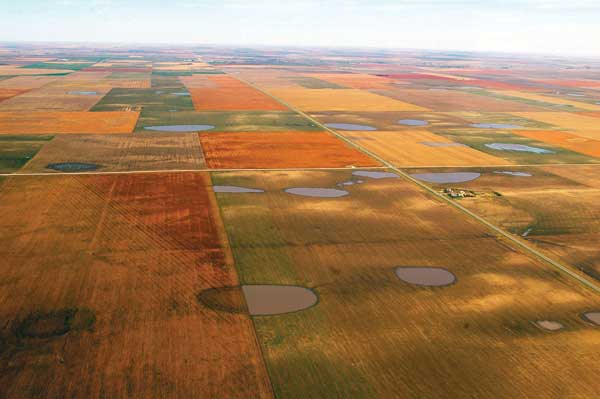
A playa is a naturally occurring low spot caused by subsurface salt deposits that dissolved thousands of years ago. With more than 23,000 playas in western Kansas, you see them often as mudholes, buffalo wallows, or just low spots. Usually they are round and shallow, and ducks and other waterfowl love them; but tractors see them quite differently. At this location is the largest playa in Lane County, a 136-acre low spot. Monitoring wells are collecting long-term data in a University of Kansas and Kansas Geological Survey study of how playa lakes add to aquifer recharge. More than 10,000 years ago Clovis People hunted mammoths, camels, prehistoric horses, and other game at this important site. It was also an important stopover for many other nomadic Indian tribes. Photo of playas in nearby Scott County by William C. Johnson/Kansas Geological Survey (map)
Sign in or join to save this attraction and track your Kansas adventures!
Sign In or JoinMcFarland’s post office has a new home in the beautifully...
What an adventure it would be to spend the night...
Crafted Caffeine is all about convenience. Located at a main...
Wyoming artist Tom Ford has opened a second Rozet Raven...