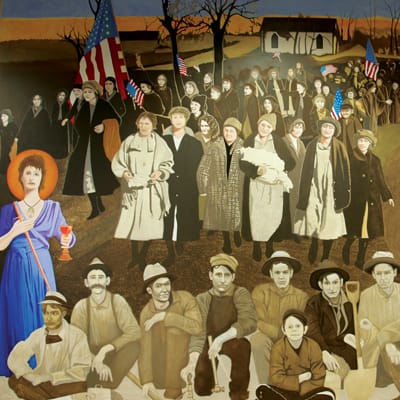
The first commercial coal mining shaft dug in 1877 was just the beginning of the coal boom in Crawford County. The coal fields of southeast Kansas created jobs for thousands of Europeans who came to this country to escape poverty, oppression, and political injustice. An estimated 31,000 immigrants from 52 nations arrived in southeast Kansas between 1880 and 1940, bringing with them a diversity of languages, religions, cuisines, and lifestyles. Because of the origins of its ethnic population, the coal fields became known as the "Little Balkans" of Kansas. The miners' hard work for little pay caught the attention of the Socialist Party in the early 1900s. Since most European miners tended to be pro-labor, they joined forces with the Socialists, thereby closely allying unions, strikes, and political activism with the area's coal mining industry.
Inside the Public Library, Wayne Wildcat's colorful mural illustrates the 1921 Pittsburg event involving 6,000 women marching in protest of mining conditions and in support of striking miners.
Sign in or join to save this attraction and track your Kansas adventures!
Sign In or JoinWyoming artist Tom Ford has opened a second Rozet Raven...
Crafted Caffeine is all about convenience. Located at a main...
What an adventure it would be to spend the night...
McFarland’s post office has a new home in the beautifully...